
Starting a business is tempting. Working without a boss, realizing your own ideas, living in freedom. But as soon as you dig a little deeper into the details, questions suddenly arise: sole proprietorship or Kft (Ltd.)? Standard VAT or small business tax exemption? Do I need a business plan? And what happens if my business becomes unprofitable?
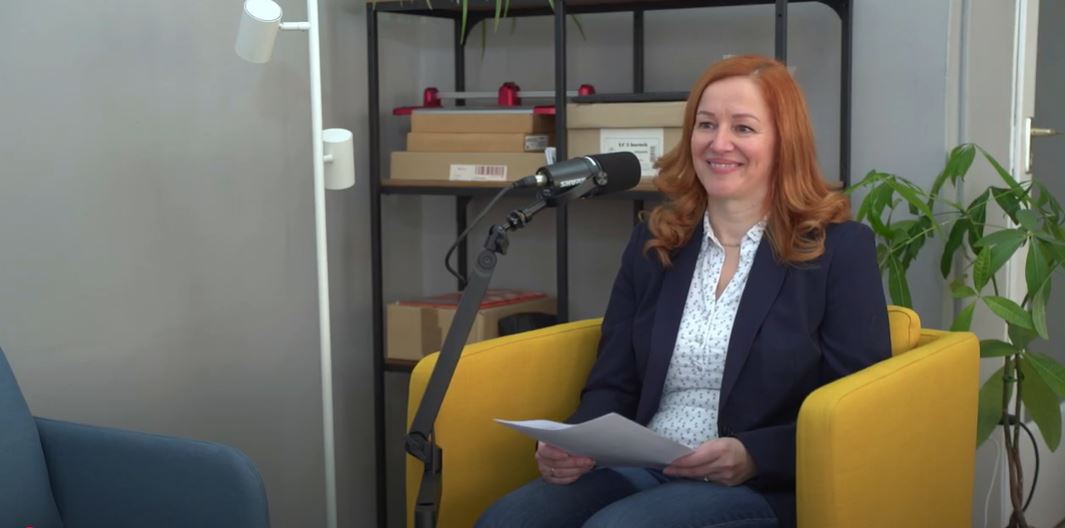
The second episode of Webgrow’s GrowCast podcast takes on these dilemmas head-on â not beating around the bush, but honestly, clearly, and without taboos. Our guest this time is TÃmea Bauer, an economist and certified bookkeeper who helps you navigate the first (sometimes frightening) steps of starting a business through practical examples.
Starting from the basics â idea, market, price
TÃmea explained that starting a business doesn’t begin with company registration, but with an idea. A product or service for which there is real market demand. Market research, mapping your target audience, choosing sales channels â all are crucial so that from day one, you know who you’ll sell to and how.
And when we get to pricing, the first pitfall appears. Many make the mistake of trying to enter the market at too low a price, thinking: “I’ll raise prices later.” But underpricing not only eliminates profitâit can also undermine your brand’s value in the long term. A well-calculated price doesn’t just cover the product’s costâit factors in marketing, fees, bank charges, and the profit you need to live on.
Which business structure should I choose?
The next critical point is the legal form of your business. Your business structure determines not only administrative burden and taxation, but also how the market perceives you, how partners relate to you, and importantly: how much you’re personally liable for the company’s finances.
A sole proprietorship is the simplest entry form. It can be started quickly and online, requires no initial capital, and is ideal for those starting alone with a service. However, you bear full personal responsibility for every dollar that happens in the business â even with your own assets.
A Kft (Ltd.), on the other hand, is a separate legal entity. Liability is limited, meaning your personal assets are protected. Operating under the company name, you can present a more serious and stable image to partners, but of course it depends on your goals. You need 3 million forints in registered capital to start, but the good news is you don’t have to deposit it in cash immediately â you can contribute it as assets (computers, equipment, etc.).
Bt (Partnership) is a business structure where at least one general partner and one limited partner work together. The general partner is fully liable for the partnership’s obligations with their entire assets, while the limited partner is only liable up to their contributed capital. This form often appears in family or business partnerships where cooperation is closer and roles are clearly defined: the general partner actively participates in management and day-to-day operations, while the limited partner acts more as a background supporter and financial investor. The advantage can be simpler operations and lower startup costs, but it’s important to understand the general partner’s liability throughout the company’s operations.

VAT registration or small business tax exemption?
One of the most common and important questions. Whether you operate under standard VAT or small business tax exemption affects not just prices, but also partner relationships, administration, and liquidity.
“Small business tax exemption is ideal for those whose expected annual revenue doesn’t exceed 18 million forints and who primarily sell to individuals domestically” â as we heard from TÃmea. You don’t charge VAT on invoices here, so there’s less administration, but you can’t reclaim the VAT you paid on purchases â meaning every purchase becomes slightly more expensive. This structure makes sense if you don’t have significant costs and your customers are individuals, not businesses.
However, if you work for business partners or sell abroad, entering the VAT system is almost unavoidable. Here, every invoice contains VAT, but you’re entitled to reclaim VAT related to your costs, which offers huge advantages especially for investments and equipment purchases. VAT status comes with more administration, but the extra work often pays off.
Don’t try to figure out everything alone when starting a business
One of the most important tips TÃmea gives: don’t think you have to figure out everything alone. A good bookkeeper or tax advisor doesn’t just sit behind the numbers â they actively help you decide, plan, and grow. It’s important to know that a bookkeeper isn’t just an “administrator.” A reliable specialist can be present from the start of your business: they can help you understand which company form to choose, which tax method suits your goals, and even advise on how frequently to file VAT if you enter the tax system. They also alert you if finances are heading in the wrong direction, if expenses are getting out of hand, or if it’s time to restructure the company. They follow changing regulations and tell you what to do if, for example, you hire your first employee, buy goods within the EU, or start working with a third-country partner.

What happens if your business becomes unprofitable?
This is the question most people avoid, yet the majority of businesses don’t generate significant profit in their first years. And that’s not failure â it’s natural. The question isn’t whether you can avoid it, but whether you’re prepared for it.
As a sole proprietor, if you incur a loss, it comes from your own pocket. The good news is that the loss can be offset against future years’ profits, so it can be “worked off” in the long term, but in the early stages, you need to ensure you have reserves for operations.
In the case of a Kft (Ltd.), the loss appears at the company level, not as personal responsibility, but you must continuously monitor the capital position. If equity falls below registered capital, the law requires mandatory measures: capital contribution, restructuring, or even dissolution. So first-year losses are not a problem â if you plan consciously and act in time.
The situation is different for sole proprietors, since there’s no separate legal entity â the business result appears directly as the individual’s income. If you have a loss, you must compensate for it from your personal income, and you have less flexibility in handling the deficit from a tax perspective. Plus, covering costs is entirely your responsibility.
In a Bt (Partnership), how losses are borne can also be specified in the partnership agreement, but it’s important to know: the general partner’s liability is not limited. That is, if the partnership cannot meet its obligations, the general partner can even be liable with their own assets for debts. Therefore, in this structure, forward-looking financial planning and caution are even more important.

Success doesn’t depend on how many things you know by heart â but on whether you’re willing to ask, learn, and find the right professionals.
For the full episode, click the link below!
Article images: pexels.com