Whether you are building a website yourself or entrusting someone to do it, the first questions you will need to decide are: what color scheme should the website have? What style? What font types should it use? These determine the appearance of your website or webshop, which is just as important as the content on it. To make the design process smooth, we show you what tools are available to help you.
Deciding on the Style
When designing the style of your website, imagine a typical representative of your target audience. Think about what kind of environment would appeal to them, where they would feel comfortable and what would encourage them to spend as much time as possible on your site?
If you have this picture in your head, then certainly some words will come to mind as well, such as: “energetic”, “conscious”, “playful”, “kind”, “luxury” etc… And this is already a good starting point, because the colors and fonts, which essentially give your website its style, also have such characteristics, so you just need to choose the ones that suit you.
Get Inspired as Much as Possible!
Collect examples that appeal to you, and in the end it will be easier to make a decision. In this work, websites that you can browse through finished web designs will help you, either by industry or by mood.
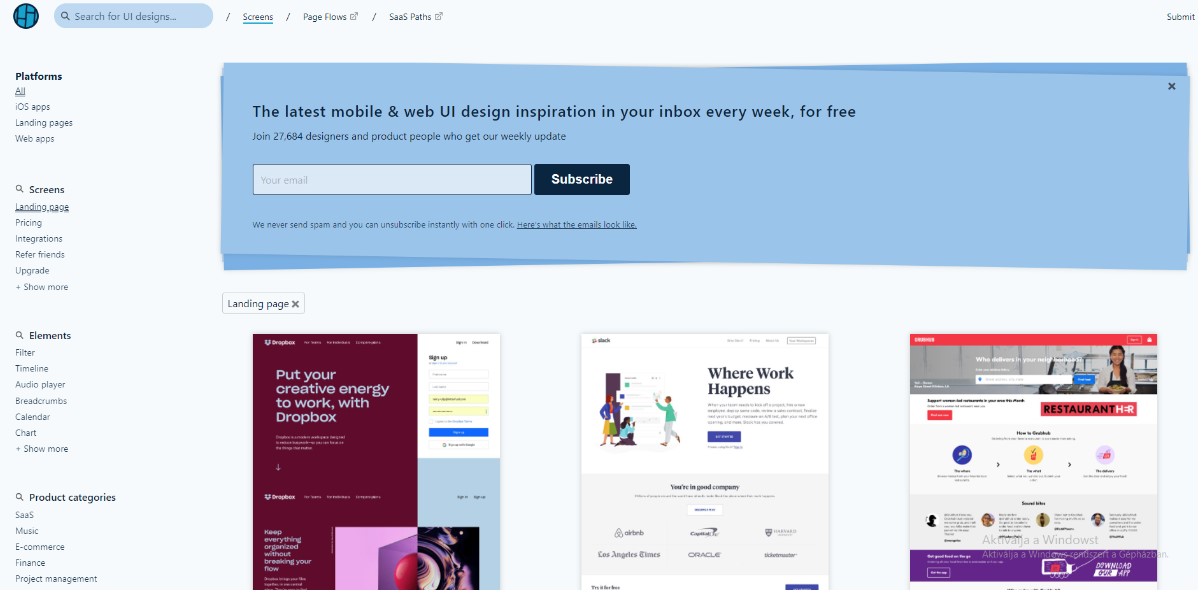
The Screenlane website
If you subscribe, they send you a newsletter on a weekly basis with the latest designs, but you can also search their database according to different topics without it.
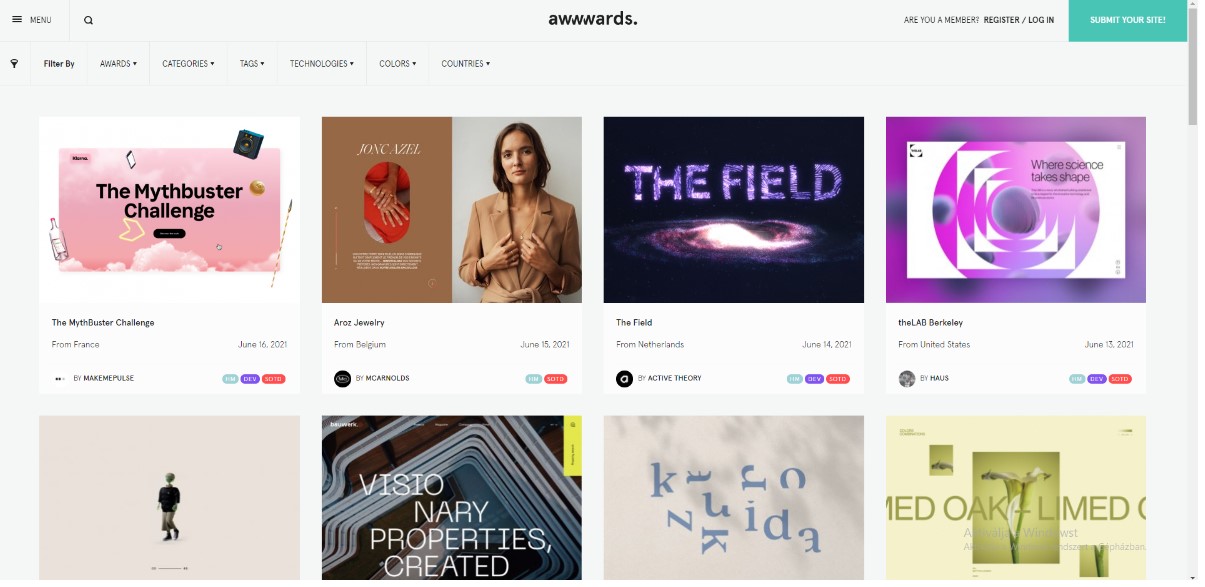
In addition to getting ideas, you can also learn from it
With its great filter options, you can search by topic, color, web engine, country. Here experts also score web designs according to various aspects, so in addition to getting ideas, you can also learn from it.
If you like a design, you can copy its color scheme, see what font style goes with what font type. For color identification, the Image Color Picker page is very useful, where you can upload your own image – even a screenshot – and it tells you the hex code of the colors pixel by pixel. There are also similar useful sites for font recognition, such as What The Font where you also get information based on a photo about what font was used in the given image.
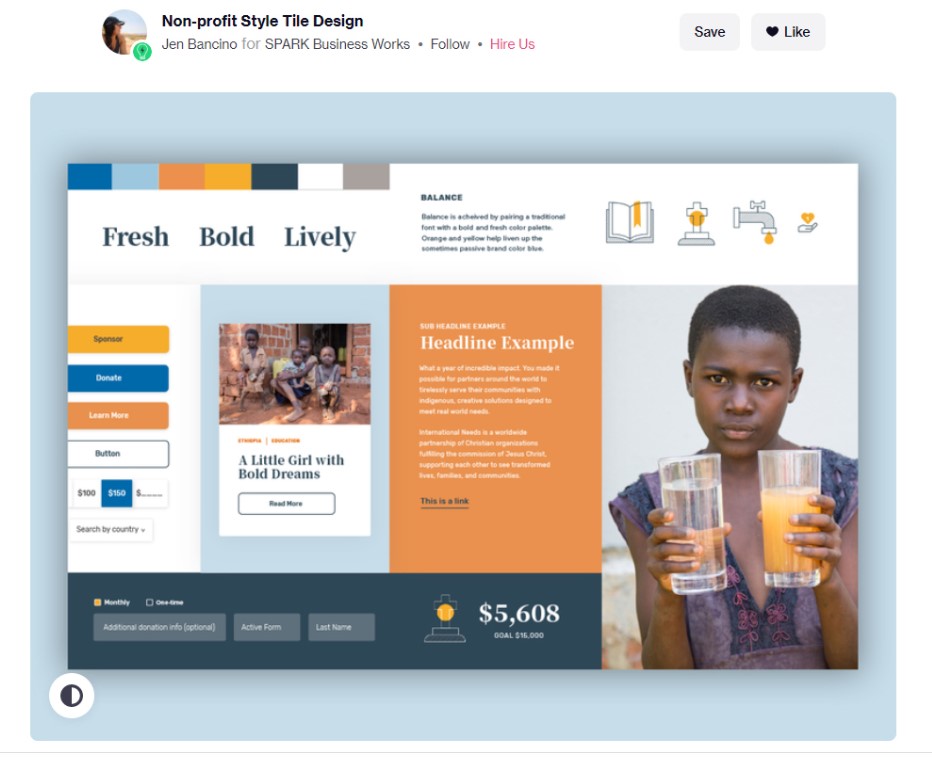
Mood board
Do you know what a mood board is? When you can see in one image all those factors that influence your senses on a website. The colors, the fonts, the way they are used. It’s almost as if you could get a taste of an entire website’s mood through one image. Well, these two mentioned sites are unbeatable in this.
What Should the Color Scheme Be Like?
According to research, 85% of customers decide whether to buy a product based on its color. It’s incredible how much it matters, isn’t it? If we think about it, every major brand, we instantly know their colors. There’s McDonald’s with its red-yellow that has been burned into our retinas, or T-mobile with its pink, or the IKEA logo, which everyone knows even if woken from sleep, is blue-yellow. Companies communicate with our subconscious through colors and these messages work the best.
The most important task, therefore, is to carefully consider what your business wants to suggest about itself and what color comes closest to that message. Use the psychology of colors! Learn which color initiates which associations in people in general.
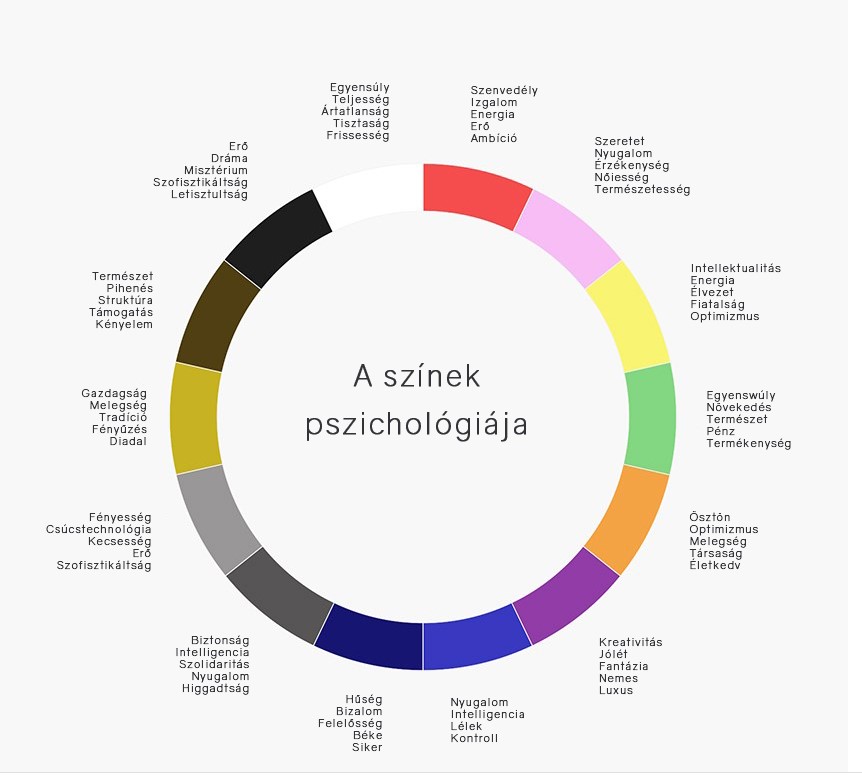
Once you have your main color, sites that allow you to create your entire color palette will be very helpful.
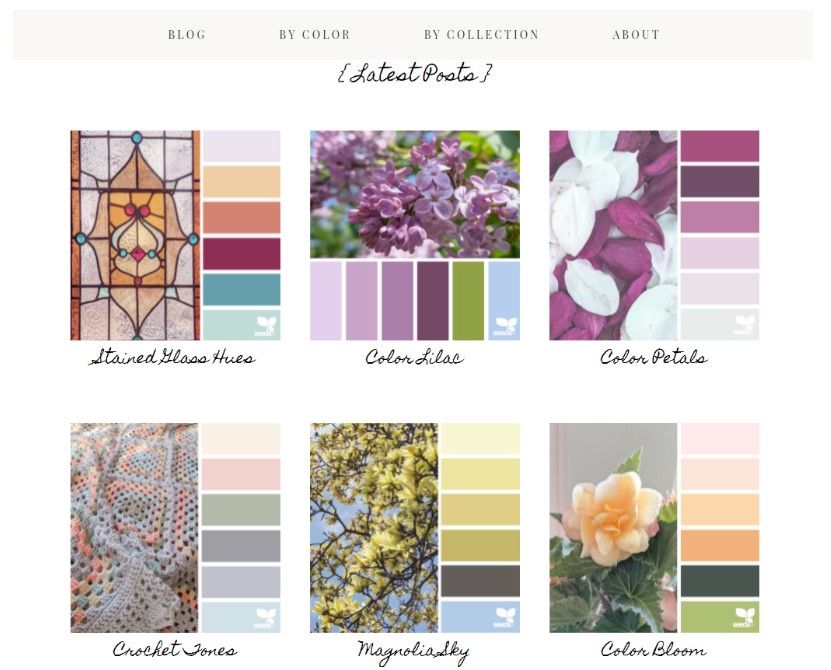
Suggests matching colors based on collections and moods
Especially for pastel lovers it will be a great favorite. Select a given color and it shows which other colors combine best with it. You can also be inspired by collections and moods.
Whether you already have a selected main color or not, with the help of the program you can experiment freely and also choose how the program should compose your color palette based on which color theory rule. It’s amazing that you can view your selected colors and see how they would look on a website. This is a great help for design.
What Font Type Should You Choose?
Like colors, fonts also trigger feelings and associations in people. So you need to be thoughtful about using them too. If you’ve already clarified to yourself what style your website will have, the color scheme is also set, choosing the font type won’t be so difficult anymore. It’s like choosing accessories for a painted, furnished house. You can emphasize the entire home style, but with one bad choice you can ruin the whole thing.
A few basic rules that you should always follow, whatever font type you choose:
- Always make readability the main consideration: even if your business deals with wedding planning and an ornate romantic font would fit the site very well, due to its difficult readability, choose something simpler instead.
- Don’t accumulate fonts! It’s best to use a maximum of 2-3 different types: one for headings, one for the “body” part, i.e. longer texts and perhaps one more for call-to-action buttons.
- Choose your font in such a way that it works on every platform you plan to use. It should also be ideal for offline appearances, such as business cards, catalogs, flyers.
- Achieve attention-getting through contrast! If you display the text you want to highlight in contrast, you can achieve much better results than if you tried with special fonts. The more contrasting a text is, the easier it is to read and absorb.
- It’s worth choosing rounder types. Rounder fonts are more popular for readability reasons as well. Text made of narrow, closely spaced letters is more tiring to read.
- Choose from the basic types, save the more special font for the logo!
There are many useful programs on the internet that make your decision easier:
The program name doesn’t lie: it’s truly a pleasure to choose fonts with it. You just press the “Generate” button and excellent font pairings come one after another.
Similar to the previous program. Here with one button press you can get the HTML codes for embedding as well.
If you just want to browse, look through different font sets, visit these sites: Google Fonts, Adobe Fonts, Fontsquirrel, Dafont
Creating a flawless web design is therefore not a simple task. First, a clear picture must be born in your mind and then with the help of the useful programs mentioned above, you can get relatively quickly to the point where you can also assemble the “mood board” of your future website yourself.
And if the idea has come up, but you’ve broken your back with Photoshop or the code, feel free to contact us, we’ll help!